


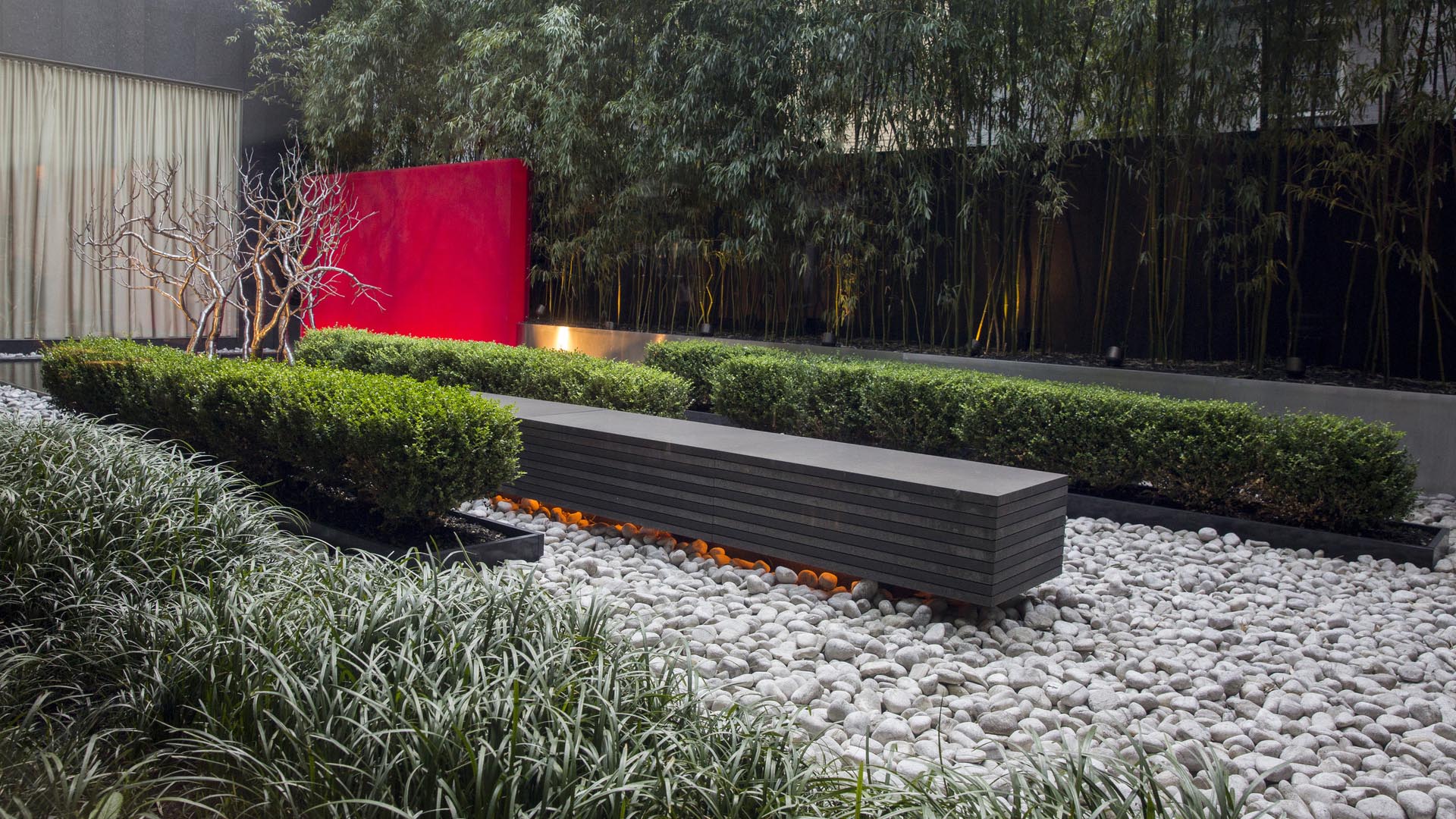

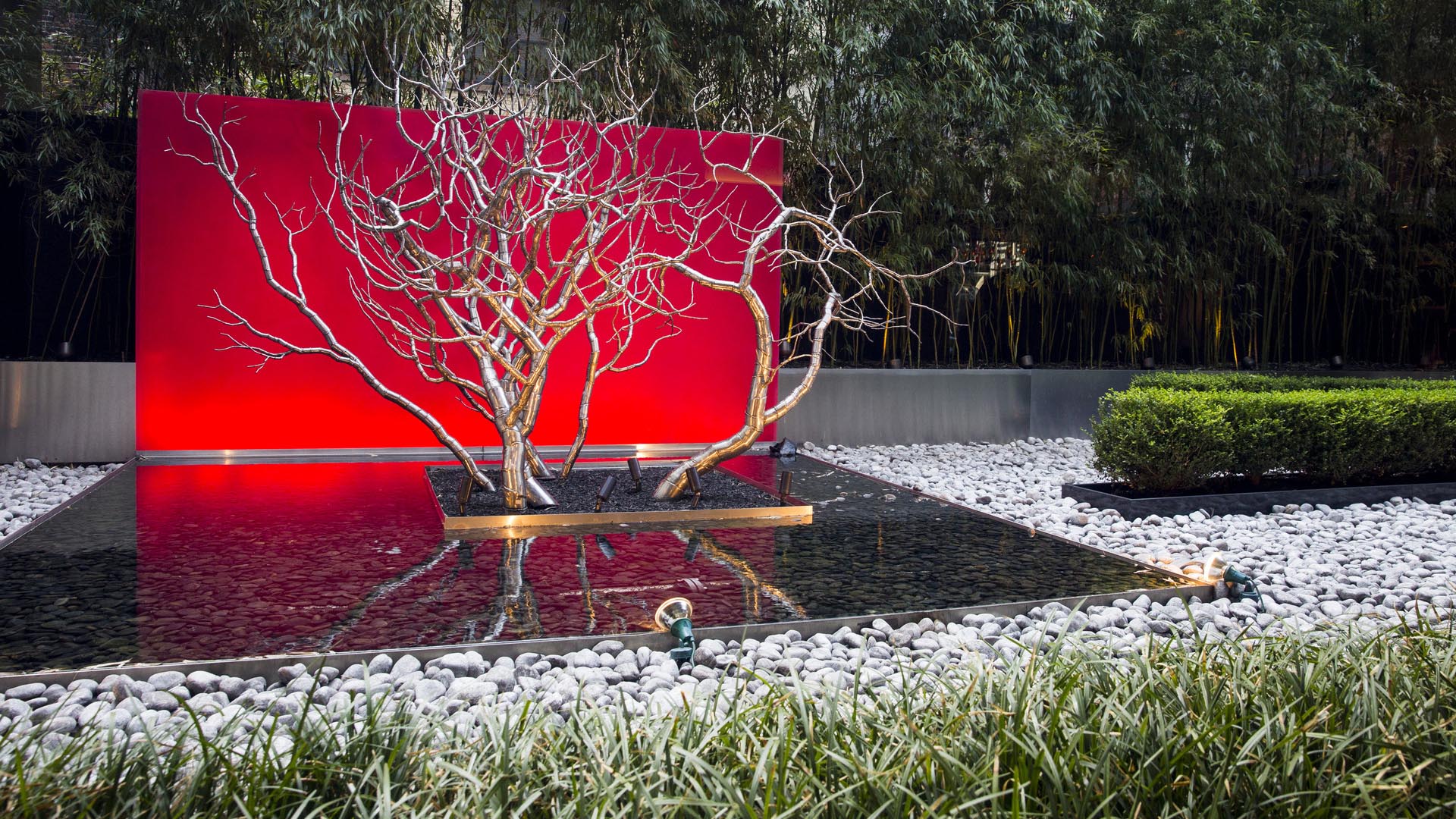


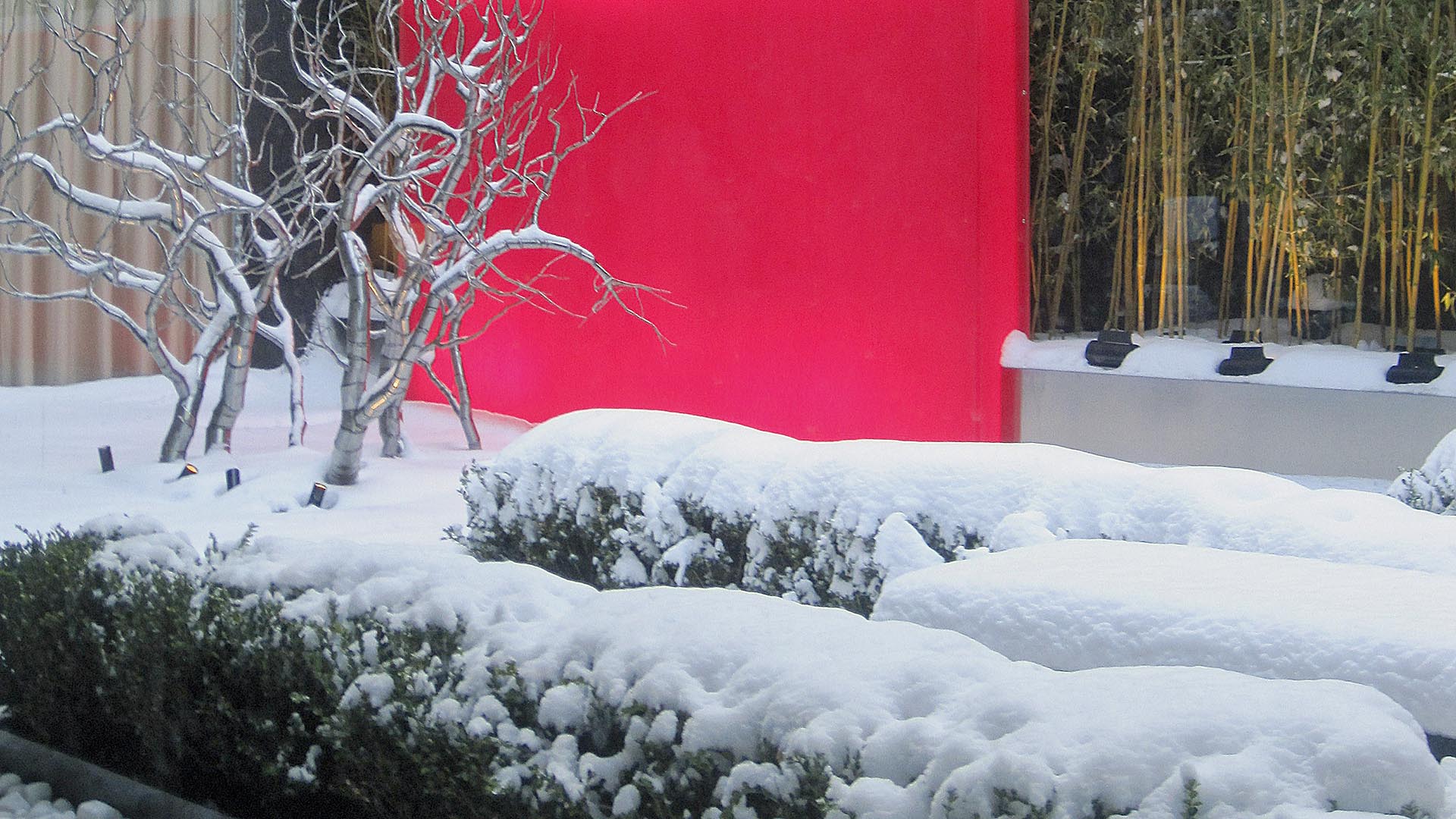
Located in the center of the vibrant Times Square district, this new four-star hotel (one of only three in New York City) serves as the base for well-traveled tourists, businessmen and dignitaries from around the world. As a unique product of the hotel’s branding and place-making strategy, the client asked that the courtyard make a memorable first impression on its visitors at check-in and their returns throughout the day. Centrally located at the hotel entrance, the space serves as the lobby’s focal point as well as the backdrop for the two restaurants that flank its sides.
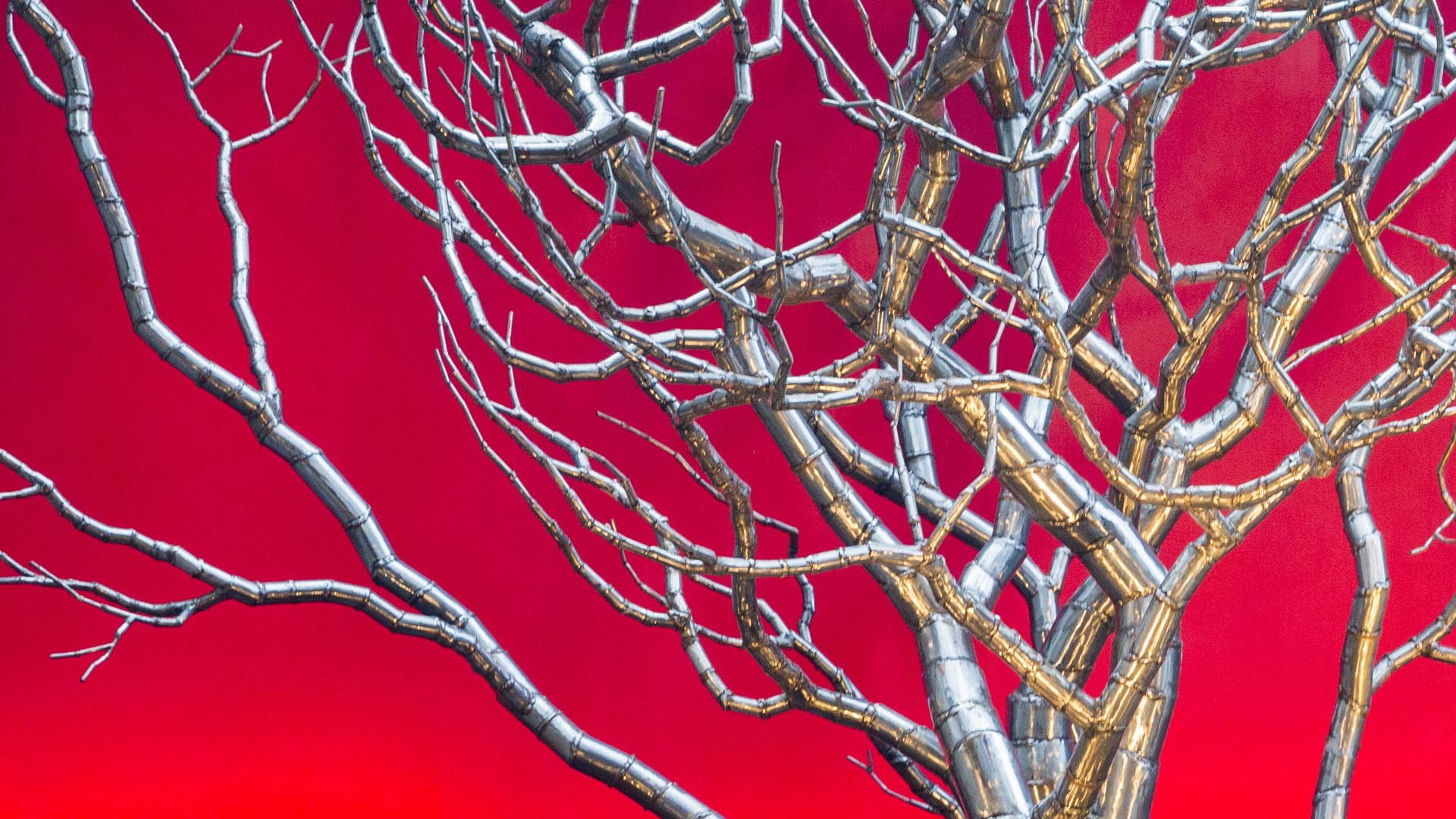
The landscape architect was given full responsibility for the space and conducted market research into the profile of the hotel guests and their expectations, from which the concept of a contemporary Zen-like space evolved; it is one of clean and timeless modernist sensibilities. In line with the designer’s philosophy, the space is designed to offer spiritual and visual refuge and escape from the bustle of the New York City street. The calm is broken only by the provocative sculpture of an aged shrub whose distinctive profile is captured against an illuminated red resin wall. Through careful selection of materials and lighting, the space glows with life throughout the day and night, in dramatic contrast to the darker, somber lobby mood. The fresh garden environment belies its urban constrictions: minimal natural light, access, and structural slabs below.
Despite its challenges and limited scope, the courtyard design has reached for the highest sustainability standards. LED lighting and the recycling of stone and steel materials are but a few examples. In addition, the courtyard has exploited all of the benefits of green roof technology and recycled water for irrigation.
At such a prominent crossroads for world travelers, this small courtyard has risen to its challenge. It has proven once again that the power of design can strongly influence the branding of a place, and has left a large first impression of landscape architecture in the urban hospitality world.
Suzhou Center
The Suzhou Center is a landmark urban space within the Suzhou Central Business District that embodies the spirit of the city of Suzhou as a gateway for intersecting old and new cultural and historic heritage. The successful combination of high density development and ecological conservation will allow for Suzhou to transition to a garden city where the state-o...
Pertamina Energy Tower
The site for the Pertamina Energy Tower is located in downtown Jakarta, Indonesia. The proposed landscape design draws inspiration from the Indonesian archipelago and the national motto of “Unity in Diversity.” The language of design will seek to blend a lush native plant palette with a refined contemporary sensibility.
Entry at the Northwest corner of ...
Lanchi Aqua Garden Hotel
Thomas Balsley Associates was invited to design one of six hotel villa sites near the ancient city of Xi’an. Collaborating with Joel Sanders Architect, the design draws inspiration from the lifestyle and design principles of traditional Chinese gardens. Like these ancient private retreats, this hotel site is also organized around a series of landscaped courtya...
Ballpark Village 200
SWA/Balsley has been contracted for full district-wide landscape services for this exciting new urban redevelopment, located directly across the street from Busch Stadium, home of the St. Louis Cardinals baseball team.
This downtown revitalization effort includes creating an iconic, unified district identity, strengthening pedestrian connection to the d...