


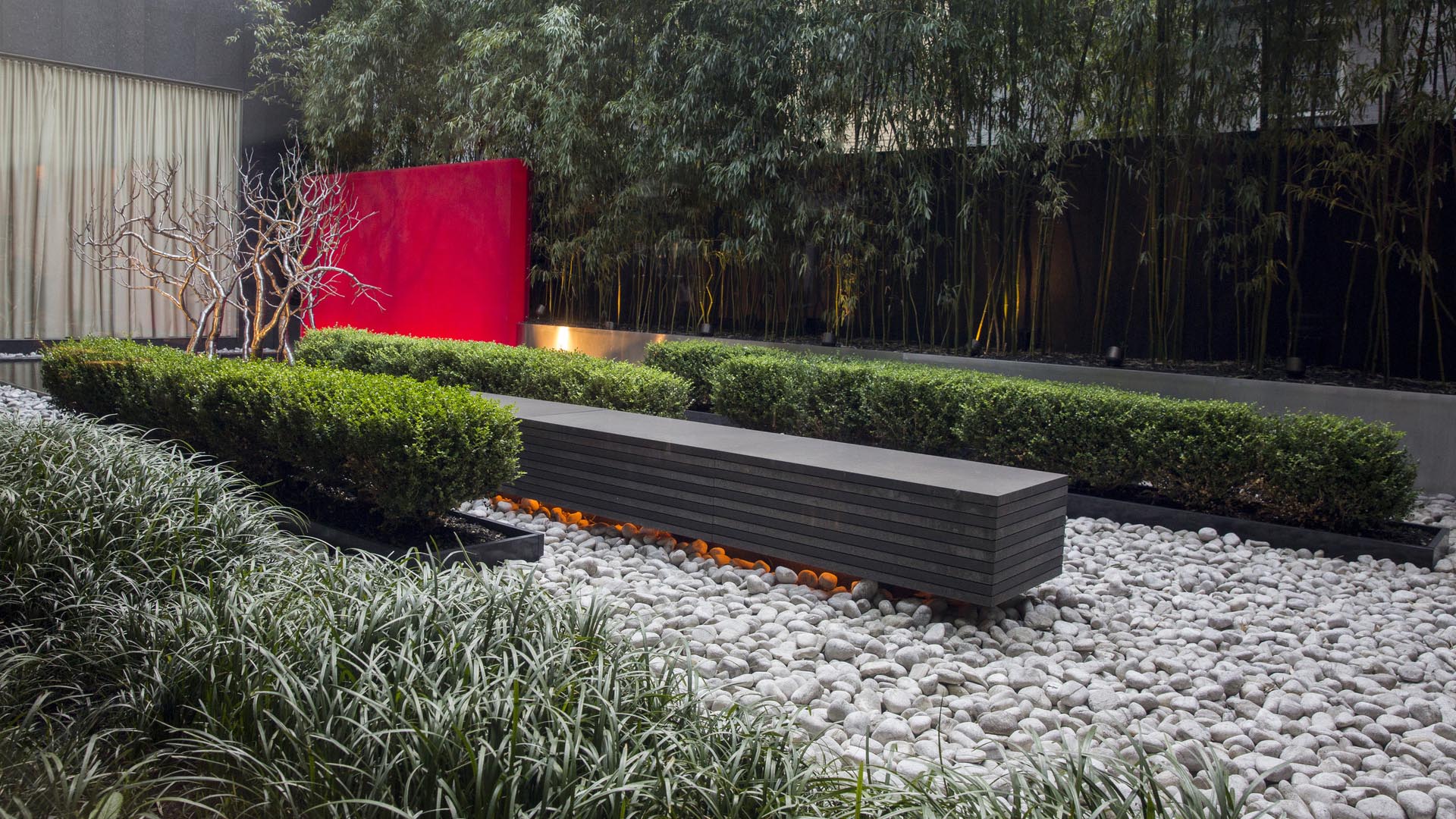

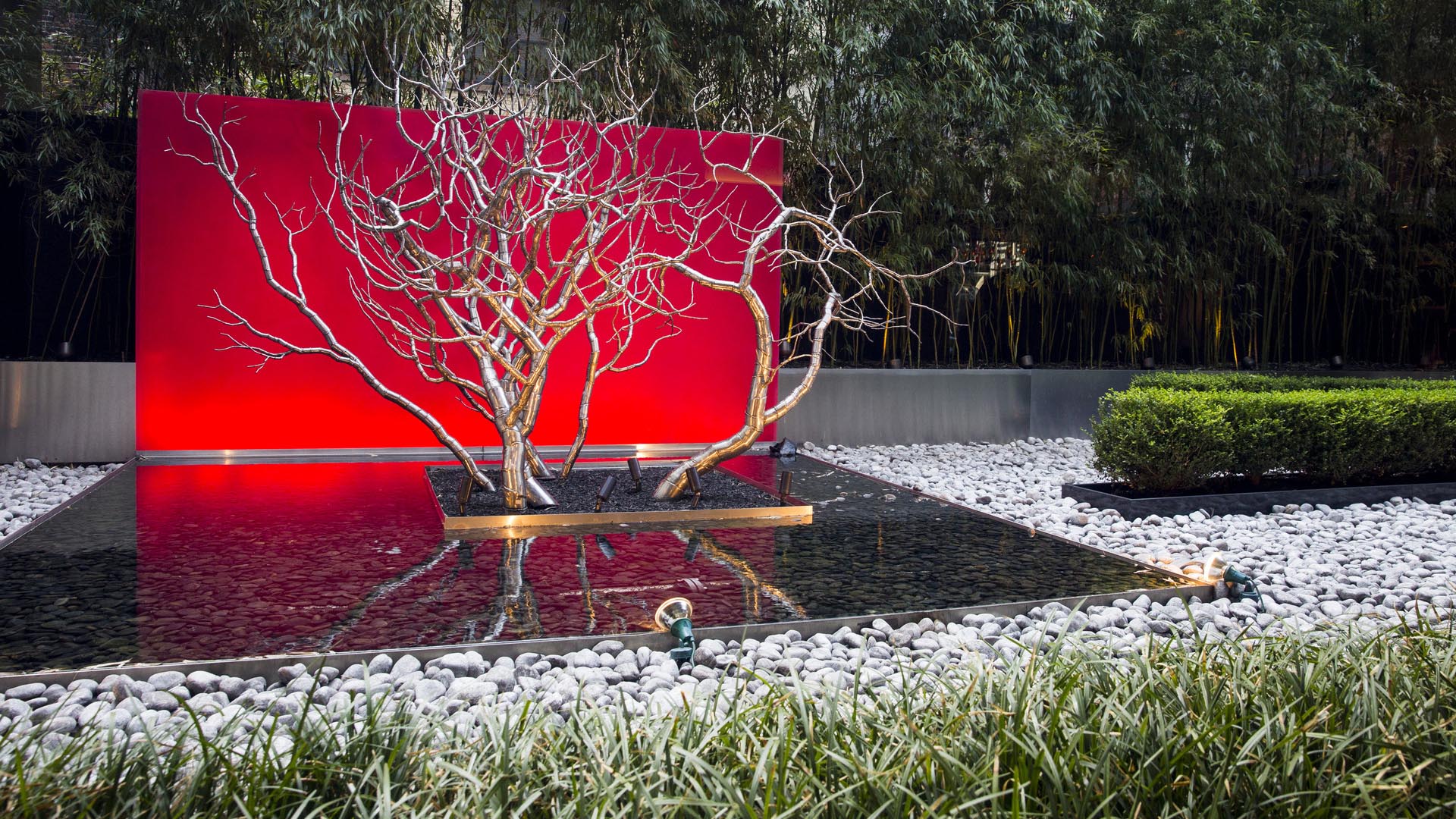


Located in the center of the vibrant Times Square district, this new four-star hotel (one of only three in New York City) serves as the base for well-traveled tourists, businessmen and dignitaries from around the world. As a unique product of the hotel’s branding and place-making strategy, the client asked that the courtyard make a memorable first impression on its visitors at check-in and their returns throughout the day. Centrally located at the hotel entrance, the space serves as the lobby’s focal point as well as the backdrop for the two restaurants that flank its sides.
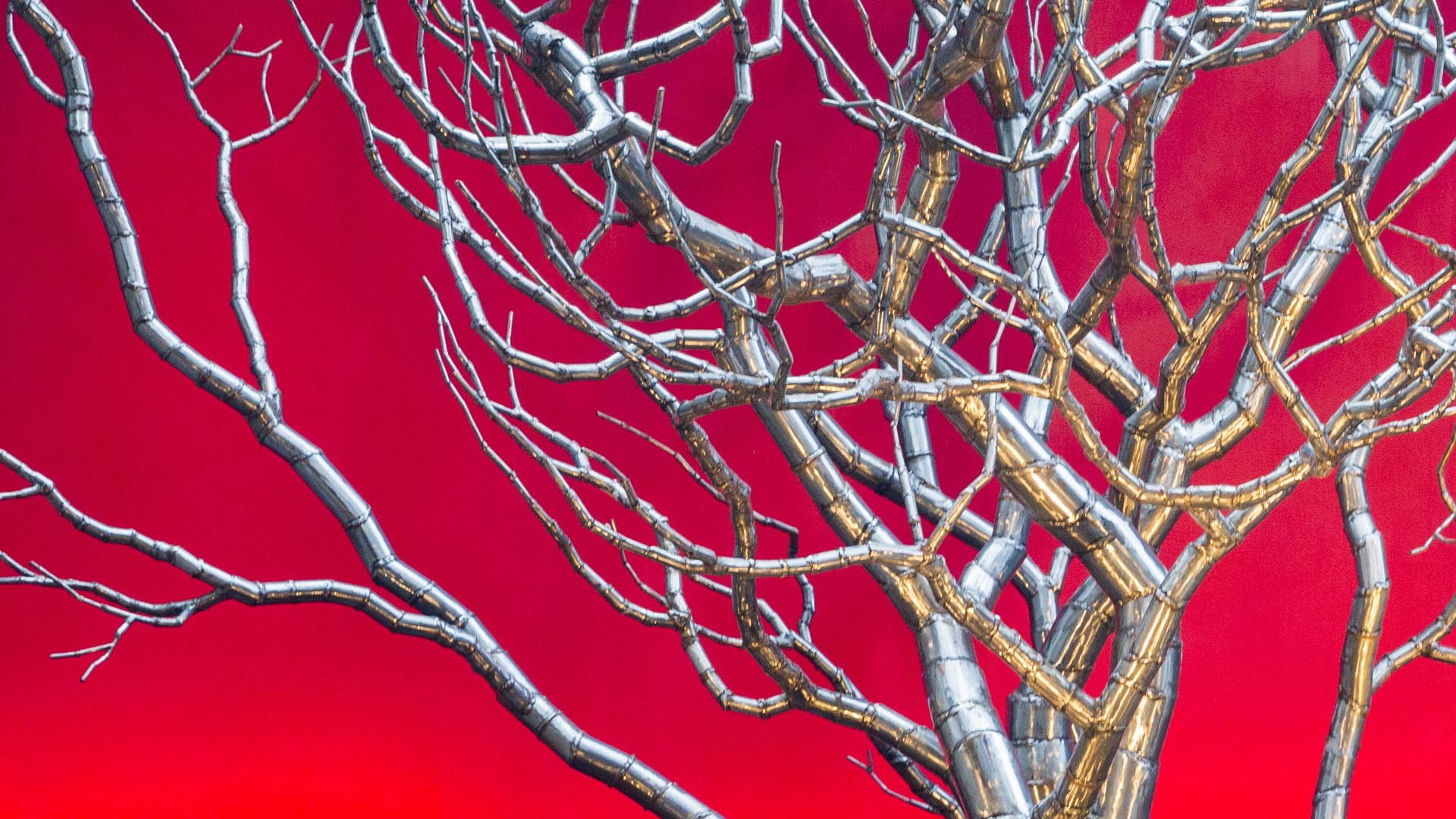
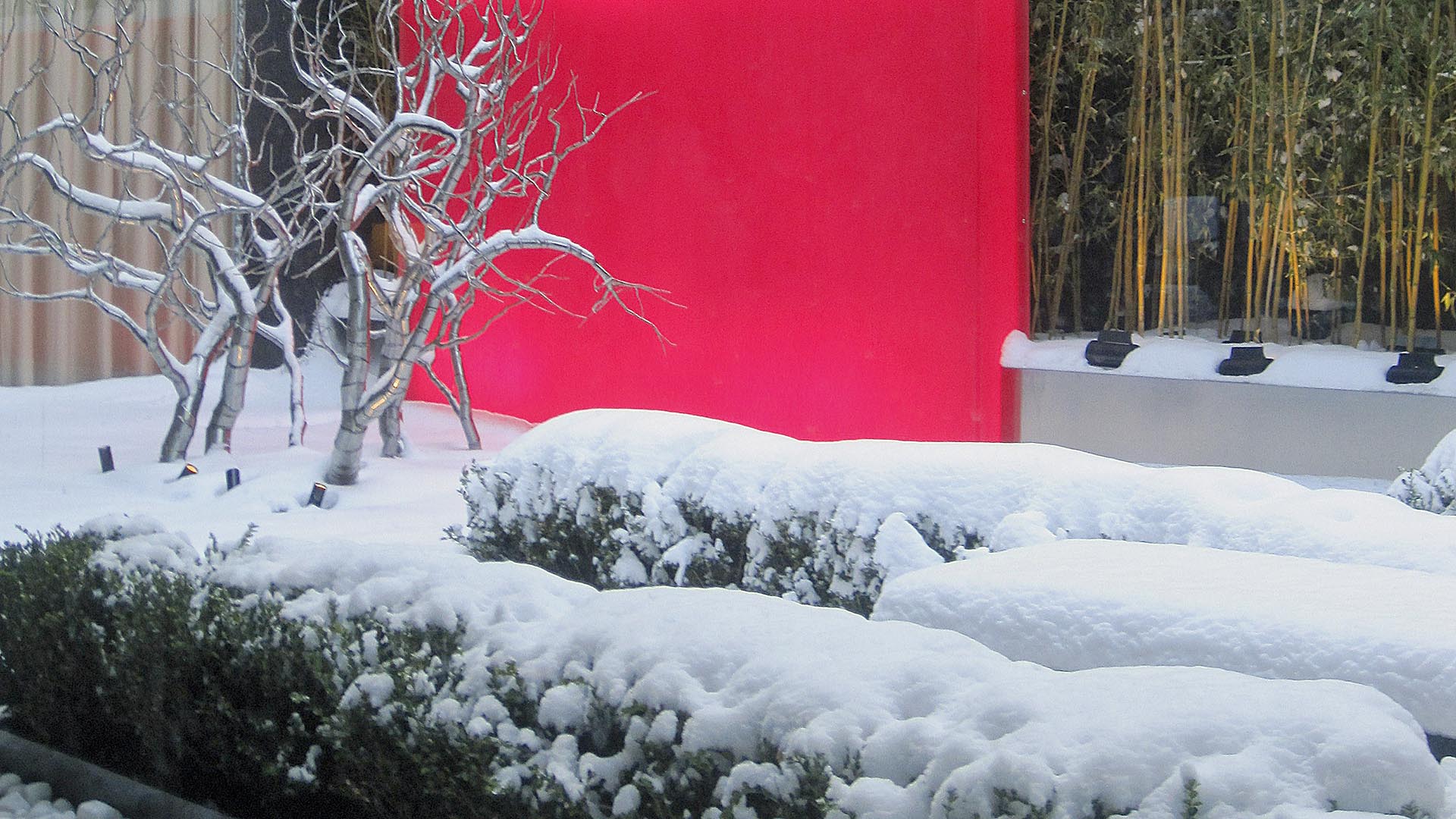
The landscape architect was given full responsibility for the space and conducted market research into the profile of the hotel guests and their expectations, from which the concept of a contemporary Zen-like space evolved; it is one of clean and timeless modernist sensibilities. In line with the designer’s philosophy, the space is designed to offer spiritual and visual refuge and escape from the bustle of the New York City street. The calm is broken only by the provocative sculpture of an aged shrub whose distinctive profile is captured against an illuminated red resin wall. Through careful selection of materials and lighting, the space glows with life throughout the day and night, in dramatic contrast to the darker, somber lobby mood. The fresh garden environment belies its urban constrictions: minimal natural light, access, and structural slabs below.
Despite its challenges and limited scope, the courtyard design has reached for the highest sustainability standards. LED lighting and the recycling of stone and steel materials are but a few examples. In addition, the courtyard has exploited all of the benefits of green roof technology and recycled water for irrigation.
At such a prominent crossroads for world travelers, this small courtyard has risen to its challenge. It has proven once again that the power of design can strongly influence the branding of a place, and has left a large first impression of landscape architecture in the urban hospitality world.
Leeum Samsung Museum of Art
From its mountainside perch overlooking Seoul, the Samsung Museum of Art Complex boasts museums by three of the world’s most sought-after architects: Rem Koolhaas, Jean Nouvel and Mario Botta. Uniting these remarkable yet divergent works of architecture is a space of clean and powerful gestures. This elegant, understated landscape serves as their matrix and mu...
Curtis Hixon Park
Curtis Hixon Waterfront Park has been heralded as Tampa’s missing “here” and the crown jewel in the city’s Riverwalk, a bold new urban plan conceived to reactivate the Hillsboro River and downtown Tampa. To ensure that the park takes its place as focal point of this new cultural district, a master plan was prepared from which the park, Riverwalk, and museums a...
Marinaside Crescent
SWA provided urban design and overall conceptual landscape architectural design for this mixed-use project including condominium buildings with shops, restaurants and storefronts at street level, a waterfront promenade, a marina, parks and inner building courtyards, and pedestrian-oriented pathways linking the Marinaside Crescent Road and surrounding streets. ...
3151 Market Street
Market Street has been one of Philadelphia’s most important thoroughfares since William Penn’s original plan for the city in the 17th century. Today, 3151 Market occupies a pivotal position at the edge of Schuylkill Yards, where the layered urban neighborhood meets the campuses of Drexel and UPenn to form a new nexus of knowledge and innovation. De...