


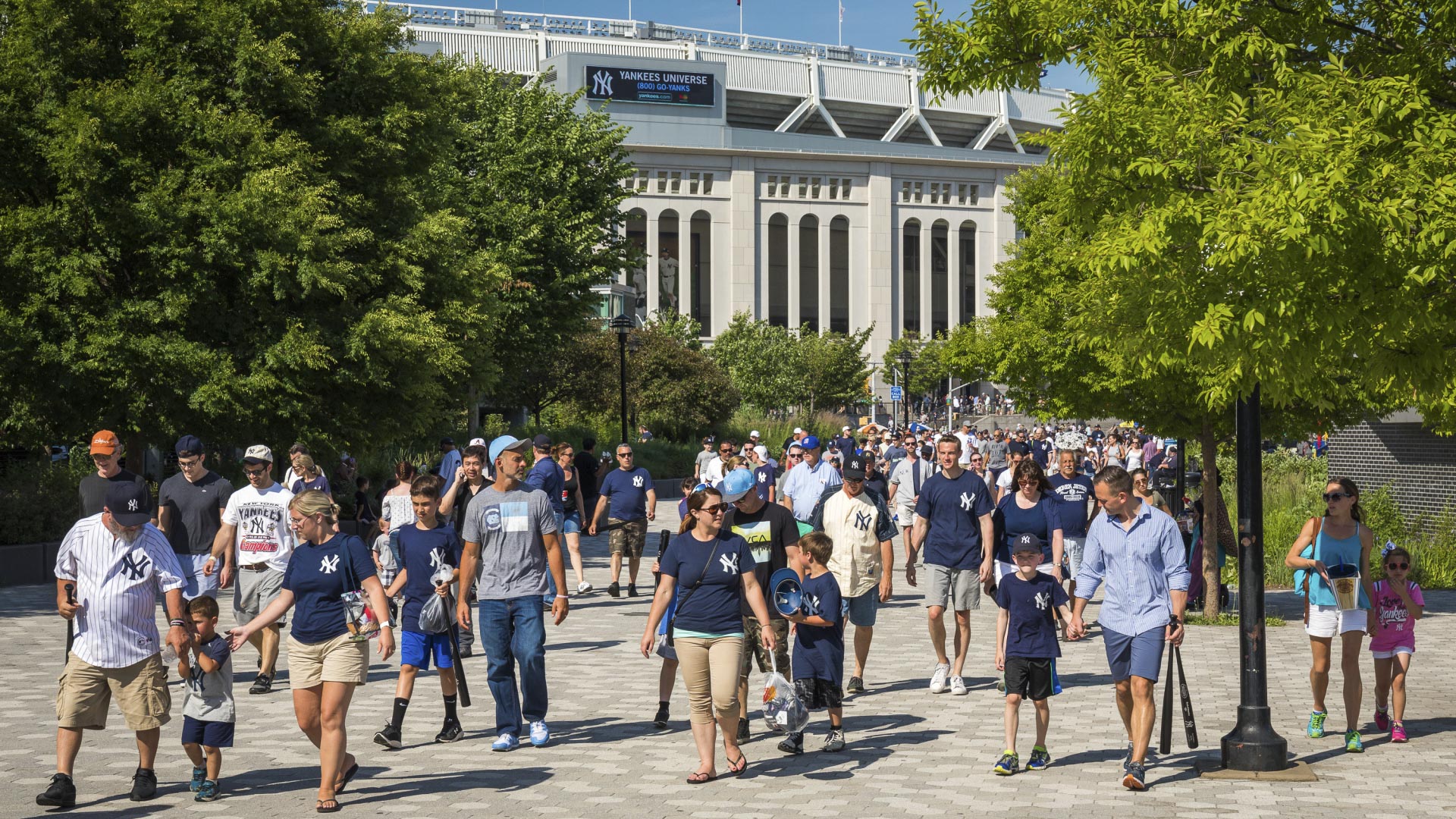
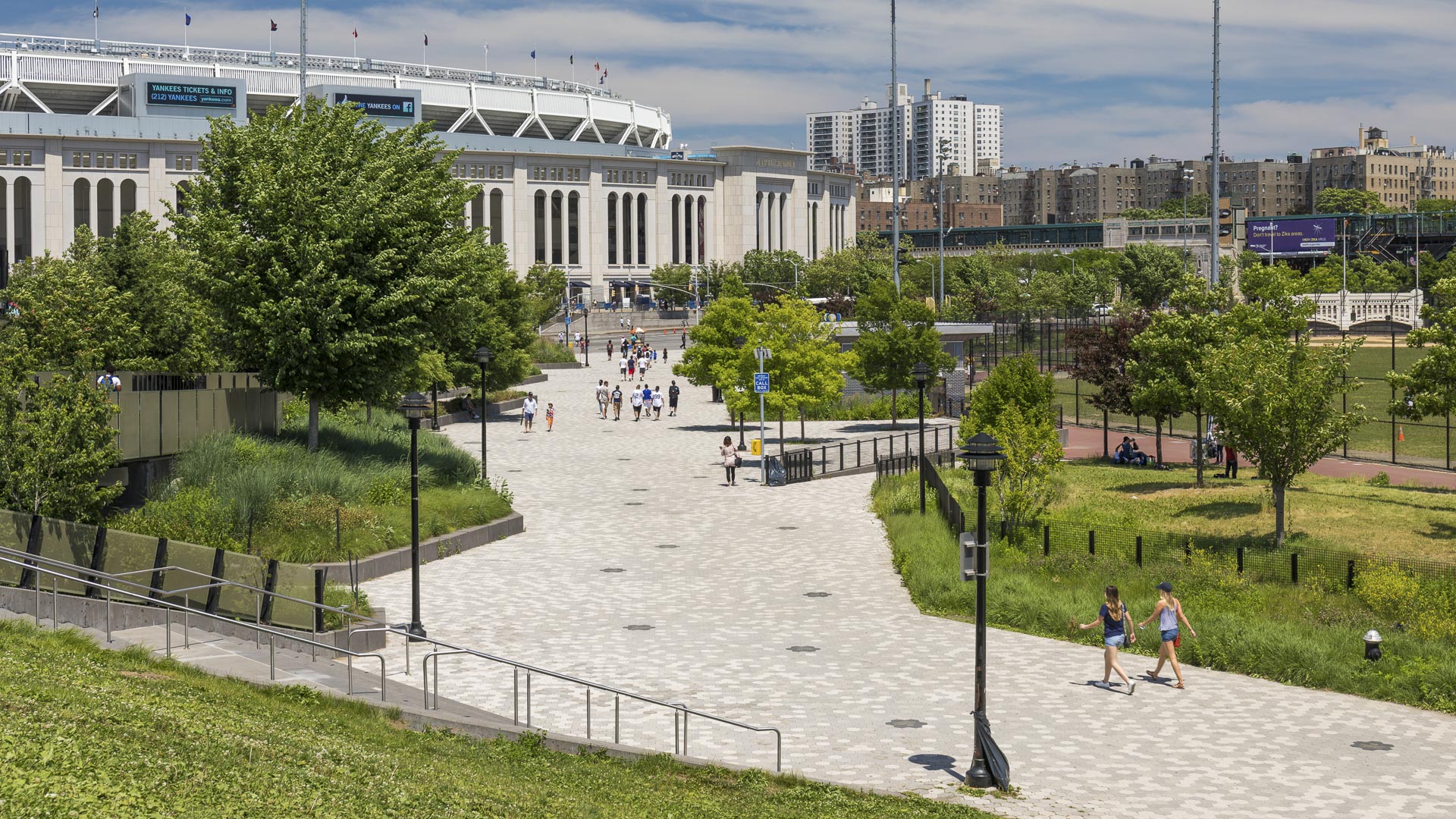


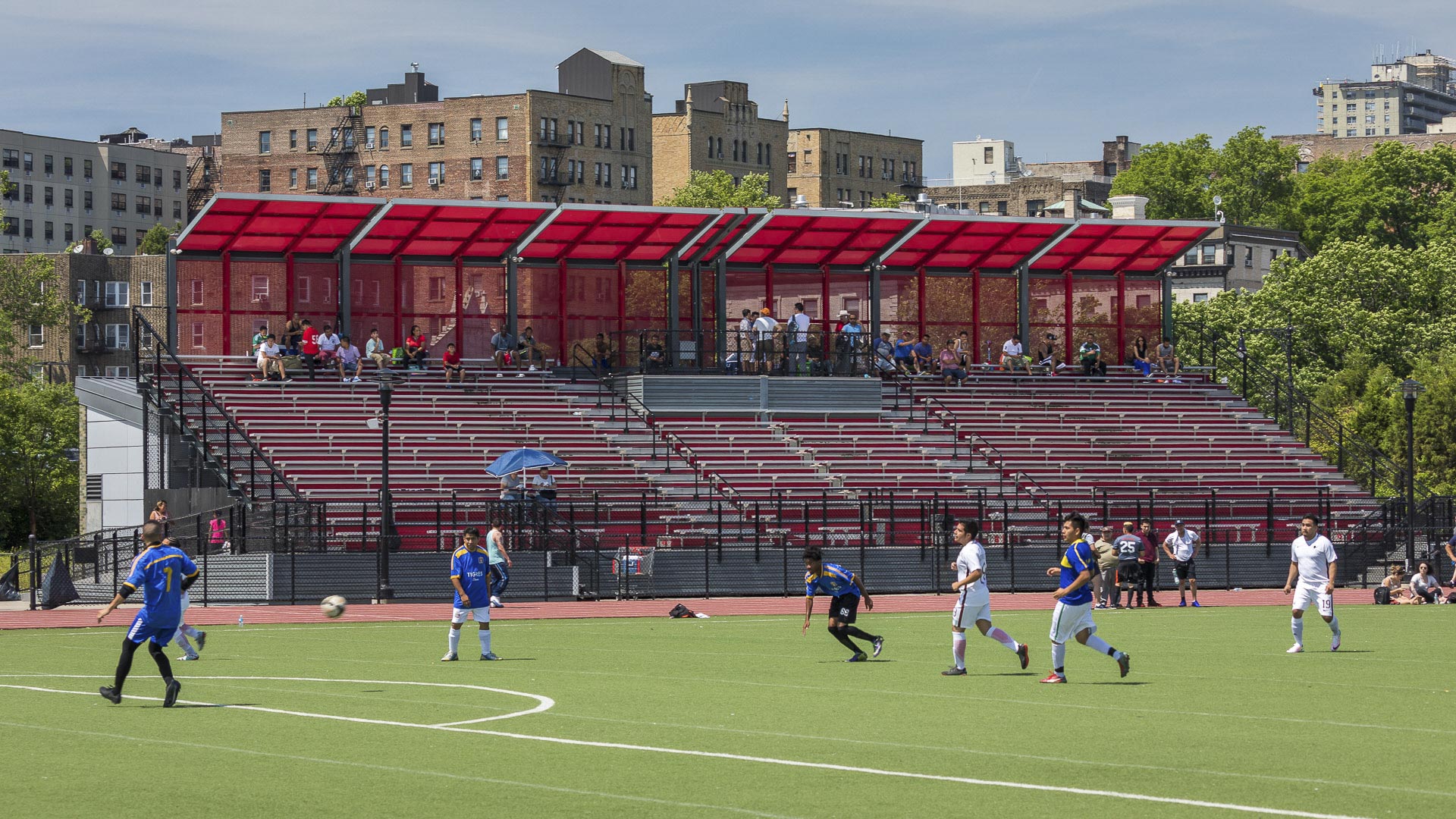
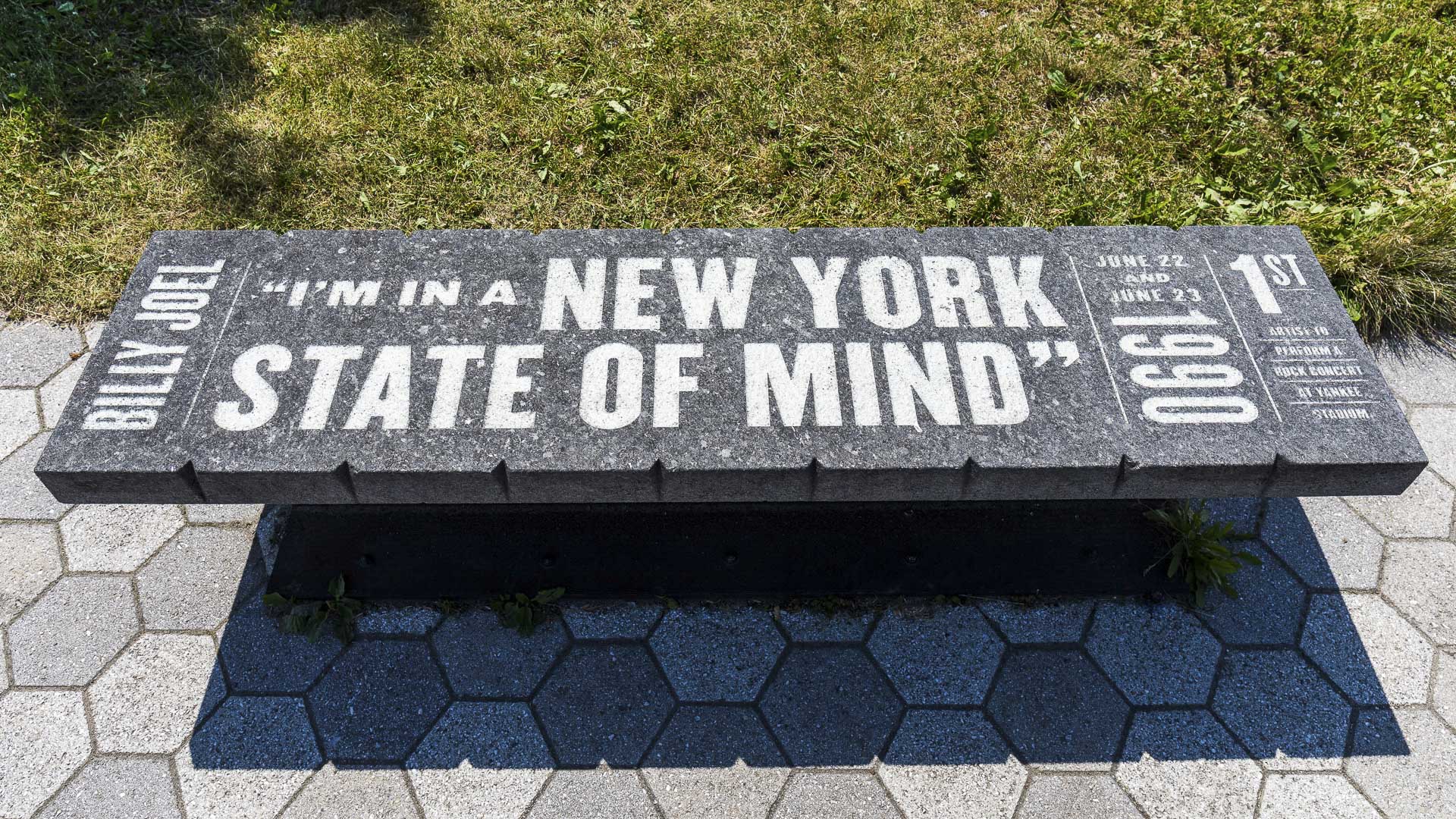
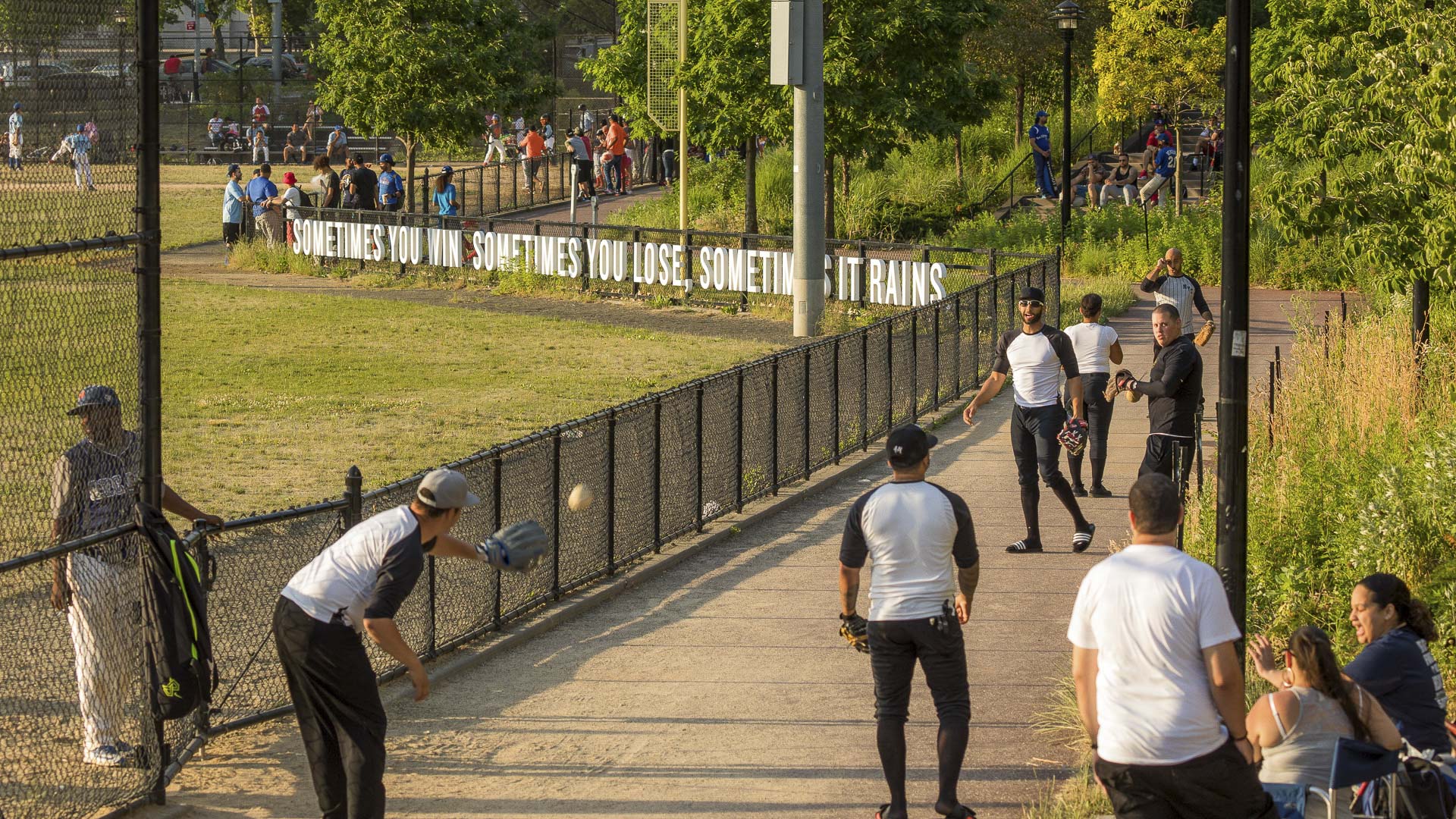


The Macombs Dam park ensemble consists of a variety of lush, contemporary green spaces in which the community can relax, socialize, and play. One segment of the landscape is a 13 acre park on the roof of the stadium parking structure, the largest full-service rooftop park every built by the City; another segment is an at-grade park where the now demolished Yankee Stadium used to stand. The rooftop park consists of an eight lane running track named after Olympian coach Joe Yancey, as well as a combination football/soccer field, 500-600 seat grandstand, comfort station, handball courts, basketball courts, adult fitness center, grassy knolls and a sledding slope. Heritage Field is perhaps the most highly anticipated piece of this South Bronx miracle: softball, little league and a regulation public baseball field where neighborhoods kids can play in the footprints of Babe Ruth. The Stantec/Thomas Balsley Associates team has composed heavily planted landforms and bioswales which define the edges of the sports fields and give the appearance of a place carved into the woodland. This extraordinary park has transformed a concrete behemoth into a verdant multipurpose greensward honoring its Yankee heritage.
Chelsea Waterside Park
In 1986, Thomas Balsley Associates was asked by the Chelsea Waterside Park Association to translate this community’s vision for a waterfront park into a design document that would be used to plan the new Route 9-A and the proposed Hudson River Park. Ten years later, when funding for the Chelsea Waterside Park was identified, Thomas Balsley Associates won an in...
Perk Park
Originally completed in 1972, Perk Park is a vestige of IM Pei’s urban renewal plan. It was built in an era when the street was seen as a menace so parks turned inward. Rolling berms around the edges and sunken areas in the middle, filled with concrete retaining walls, reflected that era. Not surprisingly, the park fell into decline; abandoned by the neighborh...
Courthouse Park
Directly across the Hudson River from Lower Manhattan, Jersey City is an important growth hub for new housing. As it has grown denser, transportation options have improved in tandem. But one of its most central and densely developed neighborhoods, Journal Square, has lacked a central public space for years.
Located on a 3.4-acre site one block from the ...
Naftzger Park
Naftzger Park offers a contemporary and communal gathering space in downtown Wichita with enough variety to appeal to everyone. Designed to activate an area of town between Old Town and a burgeoning new entertainment district, the park is at once an urban foye...